
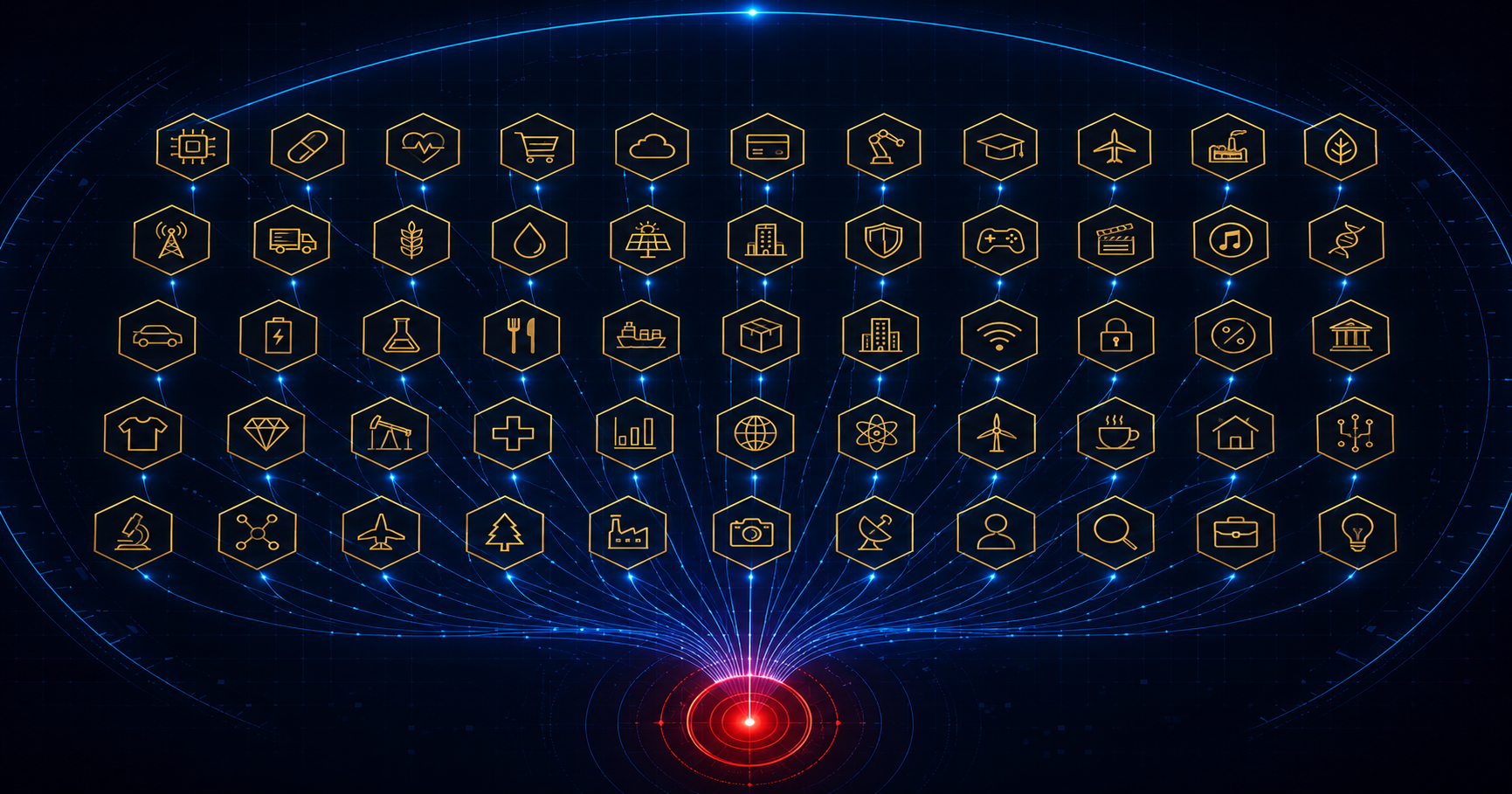
A defense-tech fund can hold twenty companies and one risk. When the shock arrives, it does not politely visit a single portfolio company — it reaches every one that shared the exposure nobody had mapped.
A venture portfolio is supposed to be a diversification machine — which is why defense technology venture capital risk intelligence matters most exactly where that machine quietly breaks. Spread capital across enough companies, the theory goes, and the failures of a few are absorbed by the successes of the rest. For a generalist consumer fund, that logic mostly holds. For a fund built around defense and dual-use technology, it does not — and the reason is the same reason the sector is attractive in the first place.
Defense-tech companies share exposures that consumer startups do not. They sell, directly or eventually, to the same customer. They live under the same compliance regime. They depend on the same contested supply chains and the same clearance-gated talent pool. A fund can hold twenty of them and believe it is diversified, when in fact it is holding twenty expressions of a handful of shared risks. Defense technology venture capital risk intelligence is the discipline of seeing those shared exposures — the correlations underneath a portfolio that looks diversified on a cap table but is not.
The failure mode is specific and expensive: a single event — a budget continuing resolution, a policy shift, a contract protest, a compliance deadline — moves through the portfolio all at once, because the companies were never as independent as their separate logos suggested.
What is portfolio risk monitoring in venture capital?
Portfolio risk monitoring in venture capital is the ongoing practice of tracking operational, market, and correlation risks across a fund’s holdings — not each company’s health alone, but the exposures they share. For a defense fund it means watching where companies depend on the same customer, regulation, or supply chain, so concentration is visible before one shock reaches all of them.
Defense technology venture capital risk intelligence starts with correlation, not count
The number of companies in a portfolio says almost nothing about how diversified it actually is. Twenty holdings that all rise and fall with the same underlying factor behave, when that factor moves, like one very large position. The count creates an impression of spread; the correlation determines the reality. A fund that tracks one and not the other is measuring the wrong thing — precisely, and with confidence, but the wrong thing.
This is where a defense-tech fund’s intuition can mislead it. The companies look different — one builds autonomy software, one makes sensors, one does secure comms — and their day-to-day operations genuinely are different. But portfolio correlation analytics for venture capital asks a different question than “are these different businesses.” It asks: when a specific shock arrives, how many of them move together? And for a defense-focused fund, the answer is frequently “more than the partners expected,” because the shared exposure lives in the customer and the regime, not in the product.
Twenty companies do not create diversification when the same underlying shock reaches all twenty. Count is what a portfolio looks like. Correlation is what it does.
Seeing that requires reading the portfolio as a system rather than a list. The clearest example is shared-customer concentration: if most of the portfolio’s revenue traces, however indirectly, to the same handful of programs or agencies, then a single procurement decision is a portfolio-level event — and a fund that has not mapped that concentration will experience it as a surprise rather than a managed risk.
The signals are in the portfolio companies, not the fund’s spreadsheet
The information that reveals concentration does not live at the fund level. It lives inside the portfolio companies — in their customer mix, their contract pipeline, their compliance posture, their supply dependencies — and it changes continuously as they grow. A quarterly board deck is a snapshot taken long after the picture moved.
What a fund needs is not another reporting cadence but a live read — genuine portfolio company operational risk monitoring that pulls signal from across the portfolio and resolves it into one picture of where risk is concentrating right now. This is a different instrument from the periodic venture capital portfolio monitoring and analytics most funds already run, which report health on a schedule; the point is to see concentration form between the reports, not to summarize it after. Real-time portfolio intelligence for venture capital is that layer — the difference between learning that three companies share a customer’s exposure from a board update after the customer’s budget was cut, and seeing the concentration form while there is still time to act on it.
ReflexOS™ reads operational signal across a fund’s portfolio companies and resolves it into one live picture of concentration and correlation. It identifies where holdings share a customer, a regulation, or a supply dependency, flags the concentration as it forms rather than after it triggers, and surfaces it for the partners’ discussion so the fund can adjust — pacing a follow-on, hedging a bet, or building the reserve the concentration warrants. It forecasts where the exposure is building; it does not make the investment decision. That judgment stays with the general partners who own it.
Used this way, a portfolio company early warning system is not a compliance tool bolted to the side of the fund. It is the instrument that lets a small team hold a real-time view of a portfolio that has grown too complex to track in a partner’s head. The broader operating model behind it is the venture capital portfolio risk management platform, and the distinction it draws between reporting and intelligence is the same one explored in operational intelligence versus business intelligence.
The payoff is not prediction for its own sake. A fund that sees concentration forming has options a fund caught by surprise does not: it can pace a follow-on differently, hold reserve against a correlated tail, or simply price the next round with the shared exposure in view. None of that requires knowing the future — only seeing the present clearly enough that a shock is a managed position rather than a discovery.
Where the shared exposure hides
Concentration in a defense-tech portfolio tends to gather in a few predictable places — each invisible on the cap table, each capable of moving multiple companies at once.
Multiple portfolio companies selling into the same programs. Government customer concentration risk analytics makes visible how much of the fund’s value rides, indirectly, on a small set of procurement decisions.
CMMC risk monitoring for venture portfolios matters because a single certification deadline or standard shift lands on every company that sells to the Department of War at once — a correlated shock disguised as individual paperwork.
Dual-use technology portfolio risk management tracks the export-control and end-use exposures that shift with policy — where a single regulatory change can constrain the market for several companies built on the same underlying technology.
Venture capital tail risk analytics is the discipline of sizing the low-probability, portfolio-wide event — the shock that is unlikely in any given year but severe enough that a fund should know its exposure to it before it arrives, not after.
Reading those together — customer, regime, dual-use, and tail — is what fund-level risk intelligence actually requires: not a health check on each company, but a map of the exposures they hold in common.
The diversified portfolio and the concentrated one can look identical on a cap table. They stop looking identical the day the shared risk arrives — and by then the difference is priced in.
A defense-tech portfolio’s real risk is the exposure its companies share, not the ones they hold alone. U.S. Aerospace Defense Group works with venture funds on the ReflexOS™ portfolio intelligence layer — reading operational signal across holdings to surface where customer, compliance, and supply-chain concentration is forming, while there is still time for the partners to act on it.
#VentureCapital #DefenseTech #PortfolioRisk #DualUse #VCRiskIntelligence #ConcentrationRisk #CorrelationRisk #GovTech #DefenseInvesting #PortfolioMonitoring #TailRisk #CMMC #ReflexOS #RiskIntelligence #GovCon #SDVOSB #USADG #IntelligenceBrief