The most important general liability decision a defense contractor makes is not which policy to buy. It is whether anyone has checked the policy against what the company actually does.
A standard commercial general liability form is a good instrument for the risks it was designed around — ordinary premises, ordinary operations, ordinary third-party exposure.
Defense contracting is not ordinary in any of those dimensions. And the places where it diverges are precisely the places a standard form goes quiet. That is what aviation general liability insurance exists to address: not a stronger version of the same policy, but a form written for the exposures the commercial one was built to exclude.
What does aviation general liability cover?
Aviation general liability covers third-party bodily injury and property damage arising from aviation operations — premises, products, completed operations, and the activities of the business. It responds when someone outside the company is harmed by what the company does, makes, services, or maintains in connection with aircraft.
Commercial general liability versus aviation general liability
This is the distinction that costs companies money, and it is worth stating plainly.
A standard commercial general liability policy typically excludes aviation exposures. Aviation general liability is written to cover them — hangar operations, aircraft servicing, products installed on aircraft, and related activities. A business that touches aviation usually needs the aviation form, because the commercial form will often exclude the very risk that business faces.
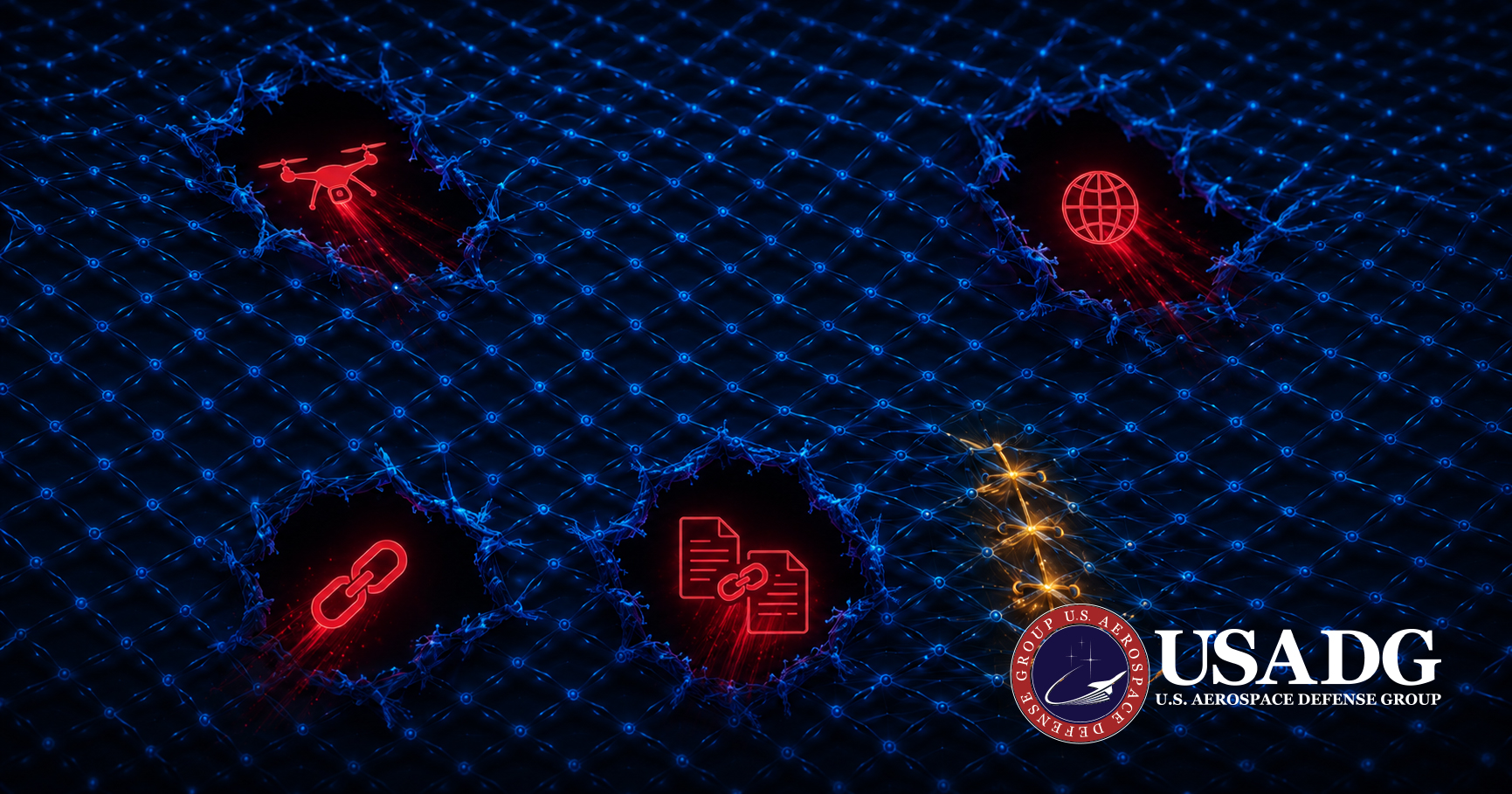
The failure mode is not that a contractor bought a bad policy. It is that a contractor bought a perfectly good policy for a company it is not. The CGL sits in the file, renewed each year, looking complete — and the aviation exclusion sits inside it, waiting. The same matching problem applies to what a company builds rather than where it operates: aerospace products liability insurance covers the exposure a manufactured part carries long after it has left the building.
A policy that looks complete on its face and a policy that matches the operation it has to answer for are two different things. The gap between them doesn’t show up until a claim goes looking for it.
Where the gaps open for defense contractors
General liability insurance for defense contractors carries a set of exposures that recur across companies of every size — and that a form written for commercial aviation was never asked to hold.
Many forms exclude unmanned aircraft outright or sublimit them well below the real profile. Drone operator liability insurance has to reach third-party damage, payload liability, and ground-control-station exposure.
Theater-specific liability and contractor-of-record obligations in contested environments are scenarios most standard policies simply never anticipated.
FAR and DFARS indemnification clauses impose obligations a program has to be aligned to, not merely adjacent to. The contract and the form were written by different people for different purposes.
Non-owned aircraft liability insurance covers the aircraft a company does not own but uses, charters, or is otherwise responsible for — a gap that surfaces the moment an employee steps onto one.
None of these gaps announce themselves. They are found by someone who reads the operation and the form side by side, and asks whether the second actually reaches the first.
ReflexOS™ maps a client’s operational footprint against its current liability structure — surfacing where an activity the operation actually performs is not matched by the coverage the operation actually holds. It runs as a real-time overlay on existing systems, available exclusively to USADG clients. When a gap surfaces, the cadence is identify → flag → discuss → adjust: the intelligence finds it, and a broker and an underwriting partner structure the fix.
When a liability program needs a second look
Most coverage gaps are not created at placement. They open later, when the operation changes and the policy does not — and they open at predictable moments. If any of the following has happened since the last renewal, the form is probably describing a company that no longer exists.
The first unmanned flight. A contractor that adds UAS operations — even a single airframe, even for internal survey work — has changed its exposure profile in a way most forms handle badly. This is the single most common gap in the market right now, and the one most likely to be discovered during a claim rather than before one.
The first deployment outside the United States. An OCONUS award brings theater-specific liability, contractor-of-record obligations, and a set of scenarios the domestic form never contemplated. It also brings the Defense Base Act into the picture, which is a separate instrument with separate rules.
A new teaming agreement. Joining a team means inheriting flow-down obligations and, frequently, indemnification language that the existing program was never aligned to. The exposure arrives with the signature, not with the first invoice.
A new contract type or a new customer. A FAR-governed award carries obligations a commercial contract does not. A contractor moving from commercial work into GovCon — or from subcontractor to prime — is taking on liability that its incumbent policy was priced without.
An acquisition, or a new facility. Both bring operations that were insured under someone else’s assumptions, and both create the classic seam: two programs that each assumed the other covered it.
None of these require a crisis to justify a review. They require ten minutes and someone willing to read the form against the operation.
General liability rarely stands alone
Aviation general liability coverage for defense contractors is one line in a program, and the lines interact. Unmanned systems exposure touches aviation. Contested-environment operations touch cyber. A global footprint touches supply chain. And when the operation takes custody of other people’s aircraft, the care, custody and control exclusion opens a gap general liability was never meant to fill — the subject of hangarkeeper’s liability insurance. And a contractor with personnel working overseas will need general liability and Defense Base Act coverage together — two different instruments answering two different questions about the same deployment.
A gap identified in isolation is only half closed if the lines around it were negotiated in separate silos that do not quite meet. That is the argument for placing a full portfolio through one broker: the program gets built as one thing, by people who can see all of it at once.
USADG is a specialized independent insurance broker and a certified SDVOSB. As an SDVOSB general liability insurance broker serving government contractors, aerospace manufacturers and aviation operators, it places and structures coverage with A-rated underwriting partners, and it advocates for clients on claims. It does not underwrite, and it does not assume risk. The aviation liability lines are set out on the USADG aviation general liability coverage page, and the broader portfolio — including Defense Base Act — sits alongside it on the full coverage index.
The risk picture that drives those placements is the same one described in real-time insurance risk profiling, built on the real-time operational intelligence platform.
Built to endure
A liability program is only as good as its fit to the operation it protects — and in defense contracting, fit is exactly where standard forms are weakest. The contractors who come through a claim intact are the ones whose coverage was mapped against what they actually do, gaps and all, before the claim arrived to find them.
That mapping is the work. Everything else is paperwork.
The exclusion in your policy is not hiding. It is written down, in the form, in the file, where anyone could have read it. The only question is whether someone reads it before the claim does.
U.S. Aerospace Defense Group places aviation general liability structured against a contractor’s actual operational footprint — and aligned with the aviation, cyber and supply-chain lines around it. A certified SDVOSB and specialized independent broker, working with A-rated underwriting partners.
#AviationGeneralLiability #GeneralLiability #AviationInsurance #DefenseContractor #GovCon #CGL #UAS #DroneInsurance #NonOwnedAircraft #OCONUS #FAR #DFARS #Indemnification #TeamingAgreements #DefenseBaseAct #CoverageGaps #SDVOSB #InsuranceBroker #RiskManagement #ReflexOS #AerospaceDefense #USADG #BuiltToEndure #IntelligenceBrief